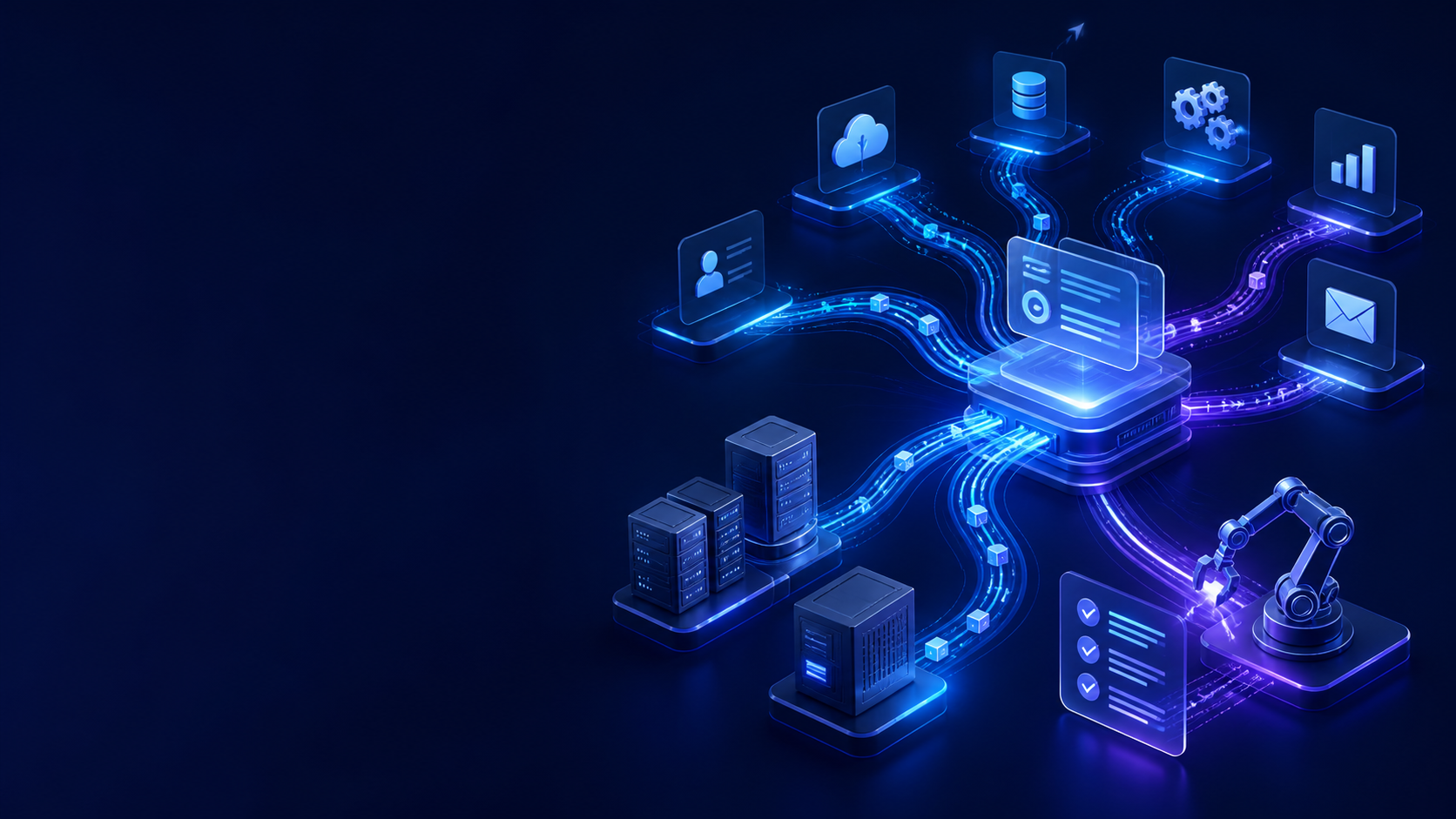
The average mid-sized business runs between 40 and 80 different software applications. Most of these do not talk to each other. Data is copied manually between systems, reports are assembled from multiple spreadsheet exports, and approvals travel by email. The result is wasted staff time, data inconsistencies, delayed decisions, and frustrated employees.
At Nimaisoft, we specialise in connecting the dots — integrating your systems, automating your repetitive workflows, and building the data plumbing that lets your organisation run as a coherent whole rather than a collection of disconnected tools.
Robotic Process Automation uses software robots to mimic what humans do on computers — clicking buttons, entering data, reading screens, copying information from one system to another. RPA is ideal for high-volume, rule-based, repetitive tasks that consume significant staff time but do not require human judgment.
We implement RPA solutions using UiPath, Automation Anywhere, and Blue Prism. Before building any bot, we conduct a process assessment to identify which processes are genuinely automatable, calculate the potential time and cost savings, and prioritise based on business impact and implementation effort.
Common RPA use cases we automate:
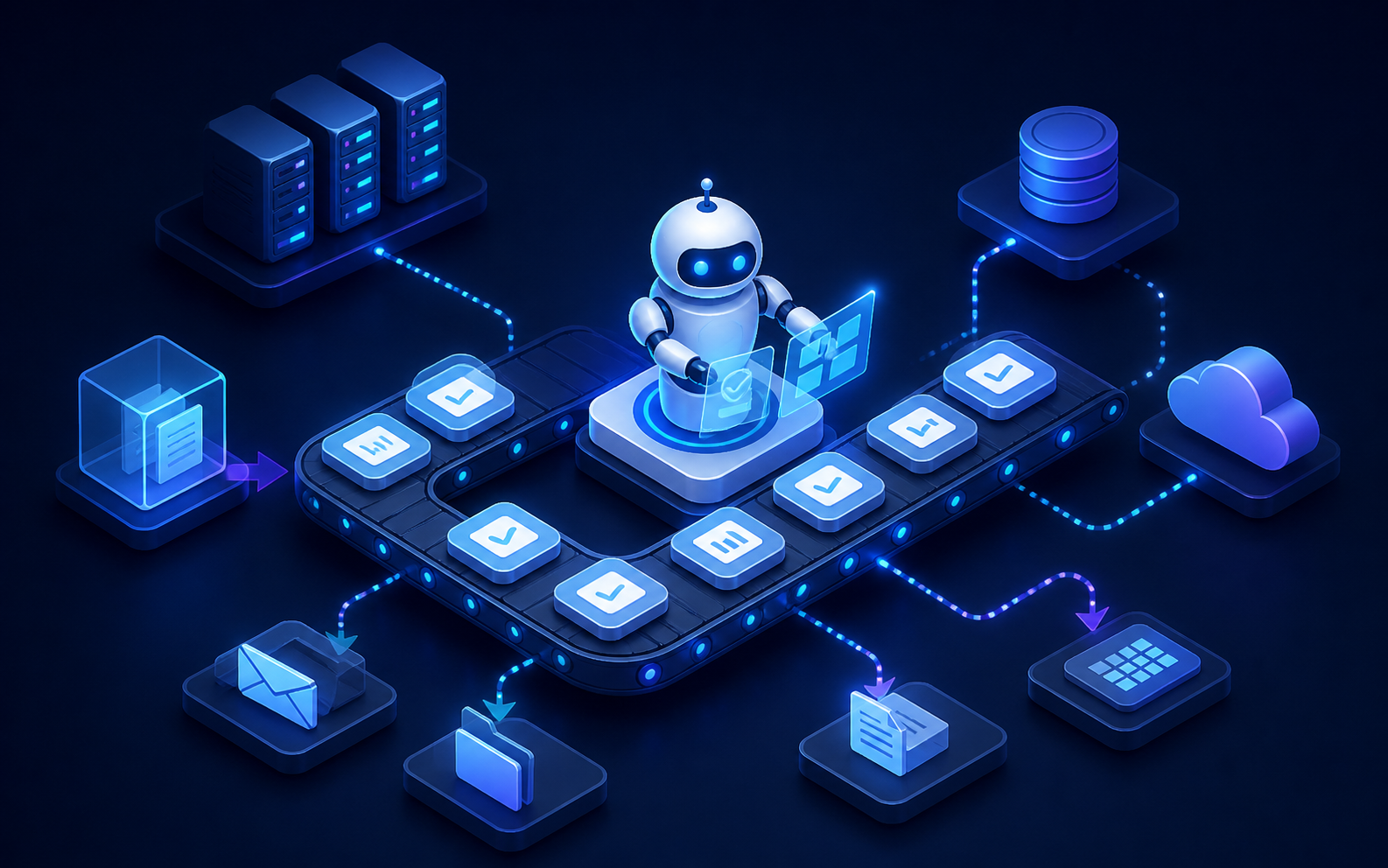
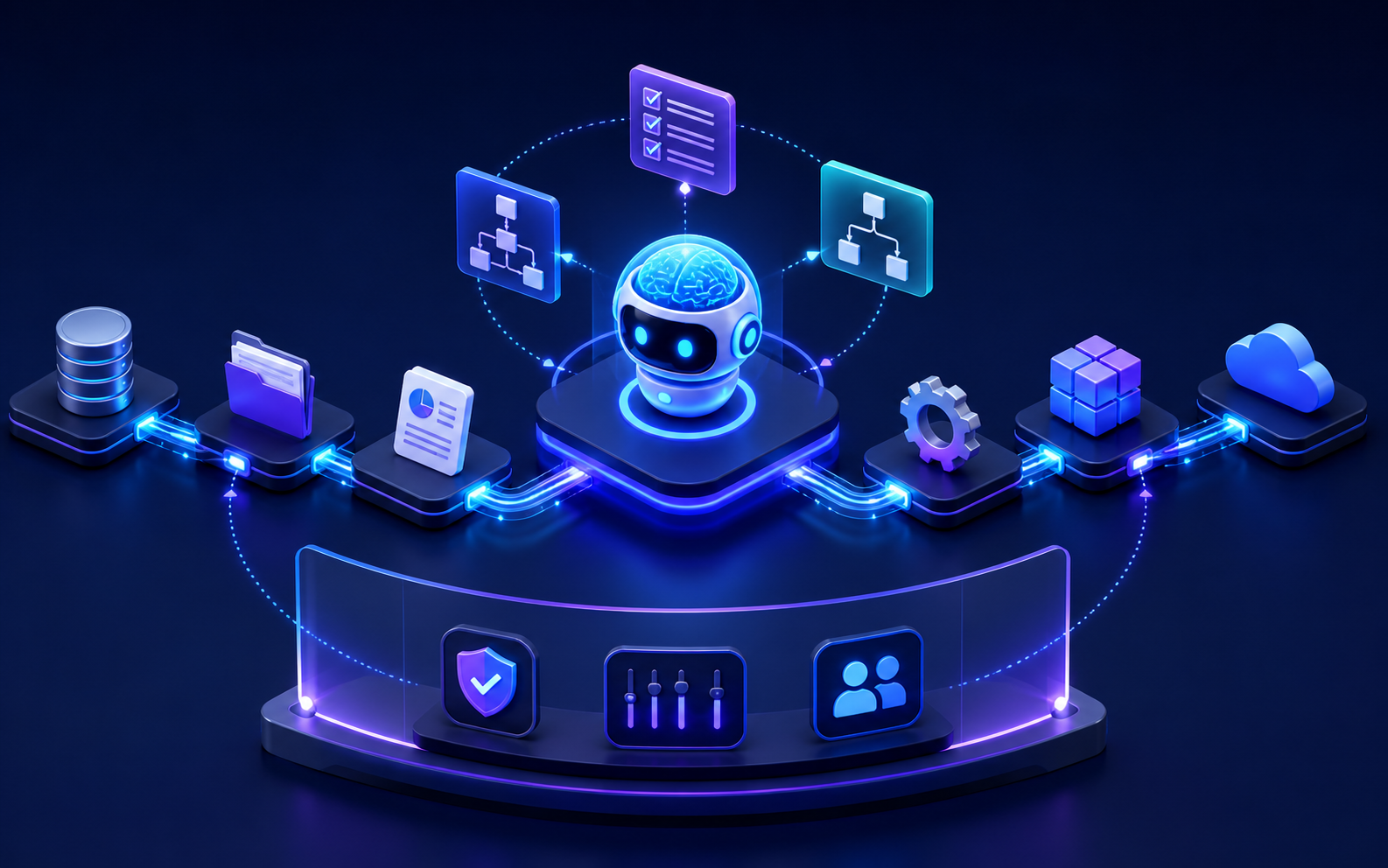
Traditional RPA handles structured, rule-based tasks well but struggles when inputs are unstructured — scanned documents, handwritten forms, emails with variable formats, or situations that require judgment rather than rule-following. AI-augmented RPA combines RPA with AI capabilities to handle these cases.
We enhance RPA bots with document AI (intelligent document processing that handles unstructured PDFs and images), NLP for understanding email content and extracting intent, and agentic AI that can handle exceptions by reasoning about them rather than escalating every edge case to a human.
APIs (Application Programming Interfaces) are the standard way modern applications communicate. Most SaaS platforms and modern applications expose APIs that allow other systems to read and write their data. Building robust API integrations requires careful design of authentication, error handling, retry logic, rate limiting, and data transformation.
We build custom API integrations between your systems — whether that means connecting your e-commerce platform to your ERP, your CRM to your marketing automation tool, or your custom application to third-party data providers. We design integration middleware that is robust, observable, and maintainable.
Integration patterns we implement:
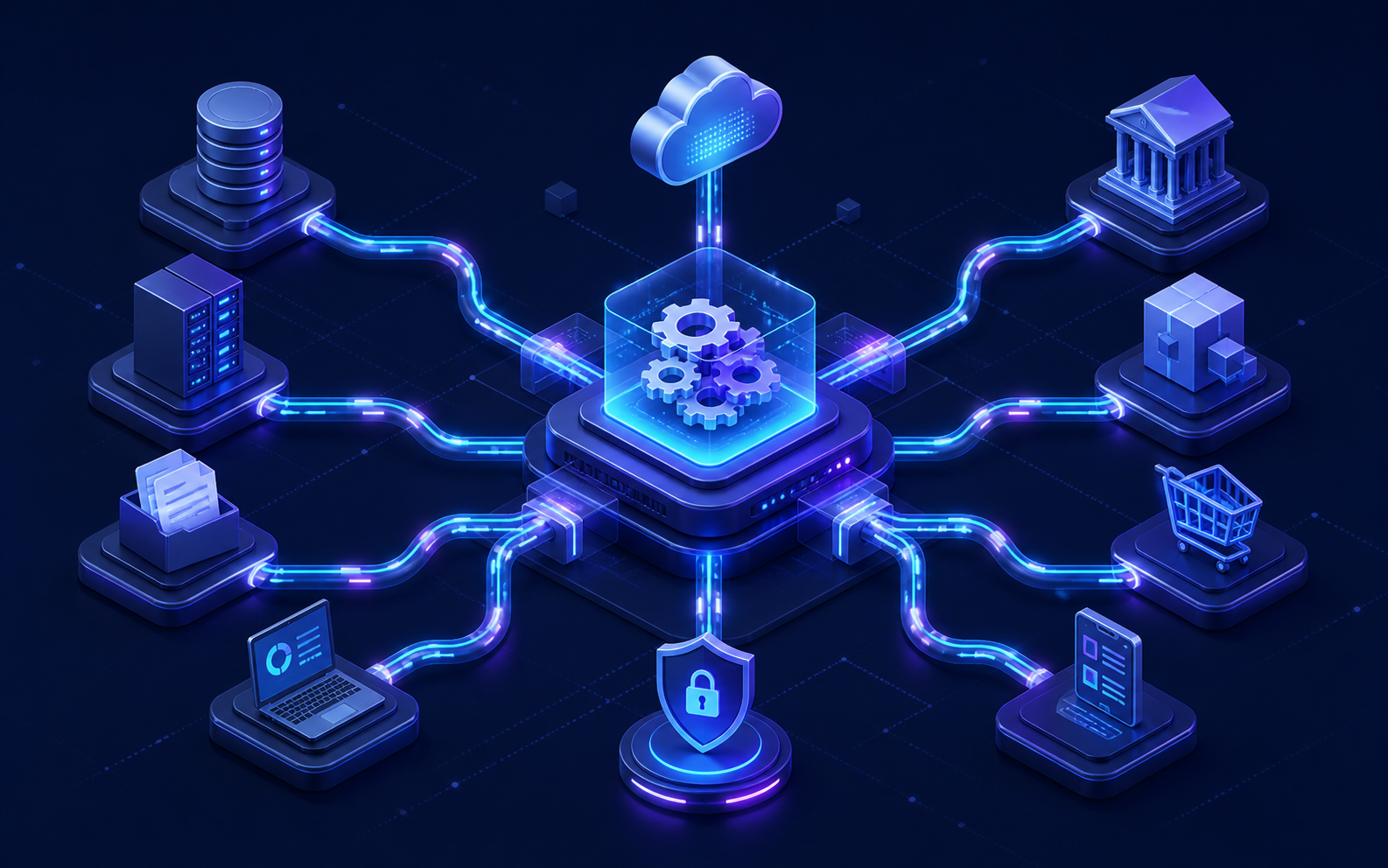
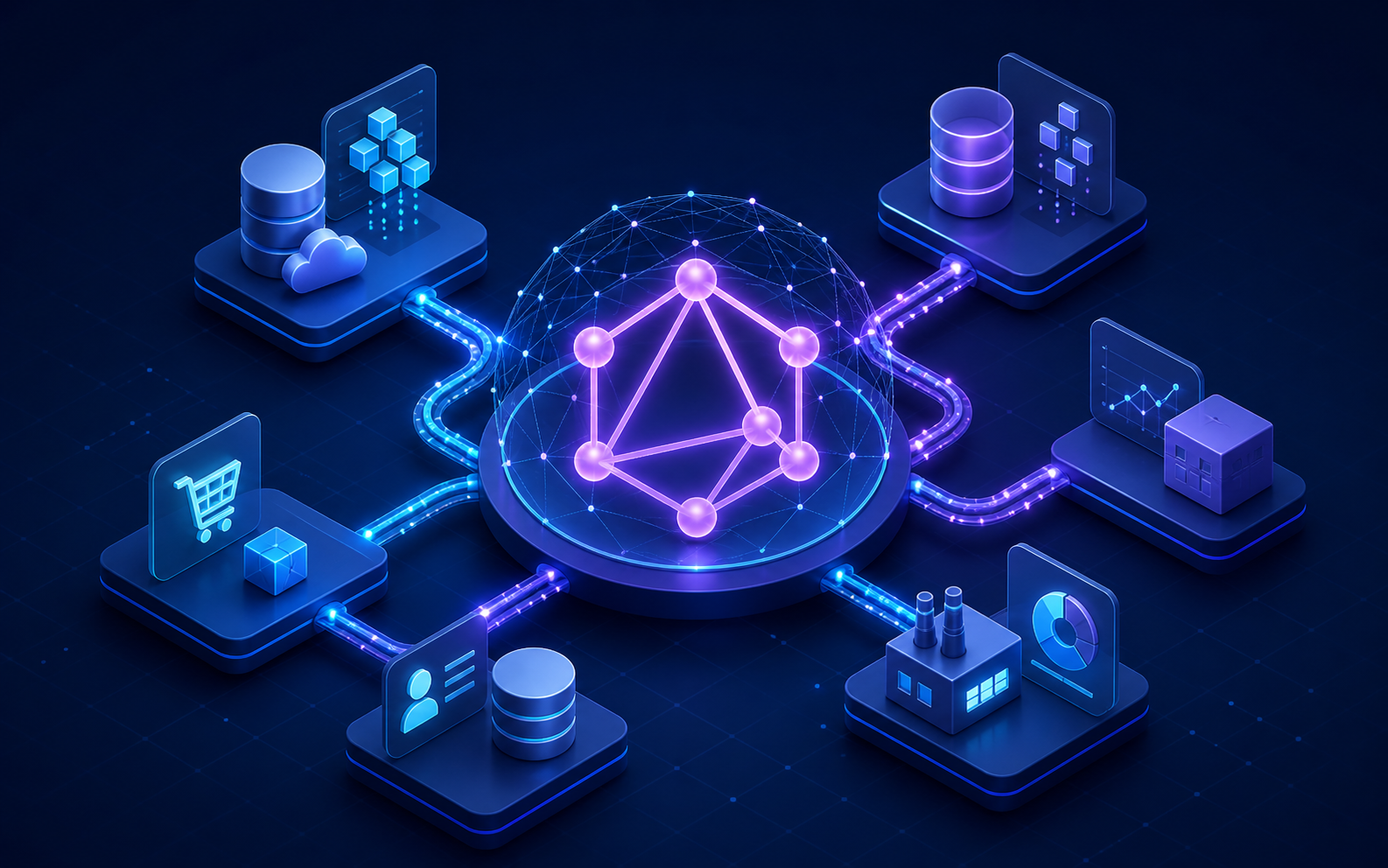
As organisations grow, they accumulate many different APIs from different systems — each with its own data model, query language, and authentication mechanism. An API mesh or federated GraphQL layer unifies these into a single, consistent API that client applications can query without knowing about the underlying complexity.
We design and implement federated GraphQL architectures using Apollo Federation and Apollo Router. Business applications — web apps, mobile apps, internal tools — query a single unified GraphQL endpoint and get back exactly the data they need, while the federation layer handles routing to the right underlying service for each field.
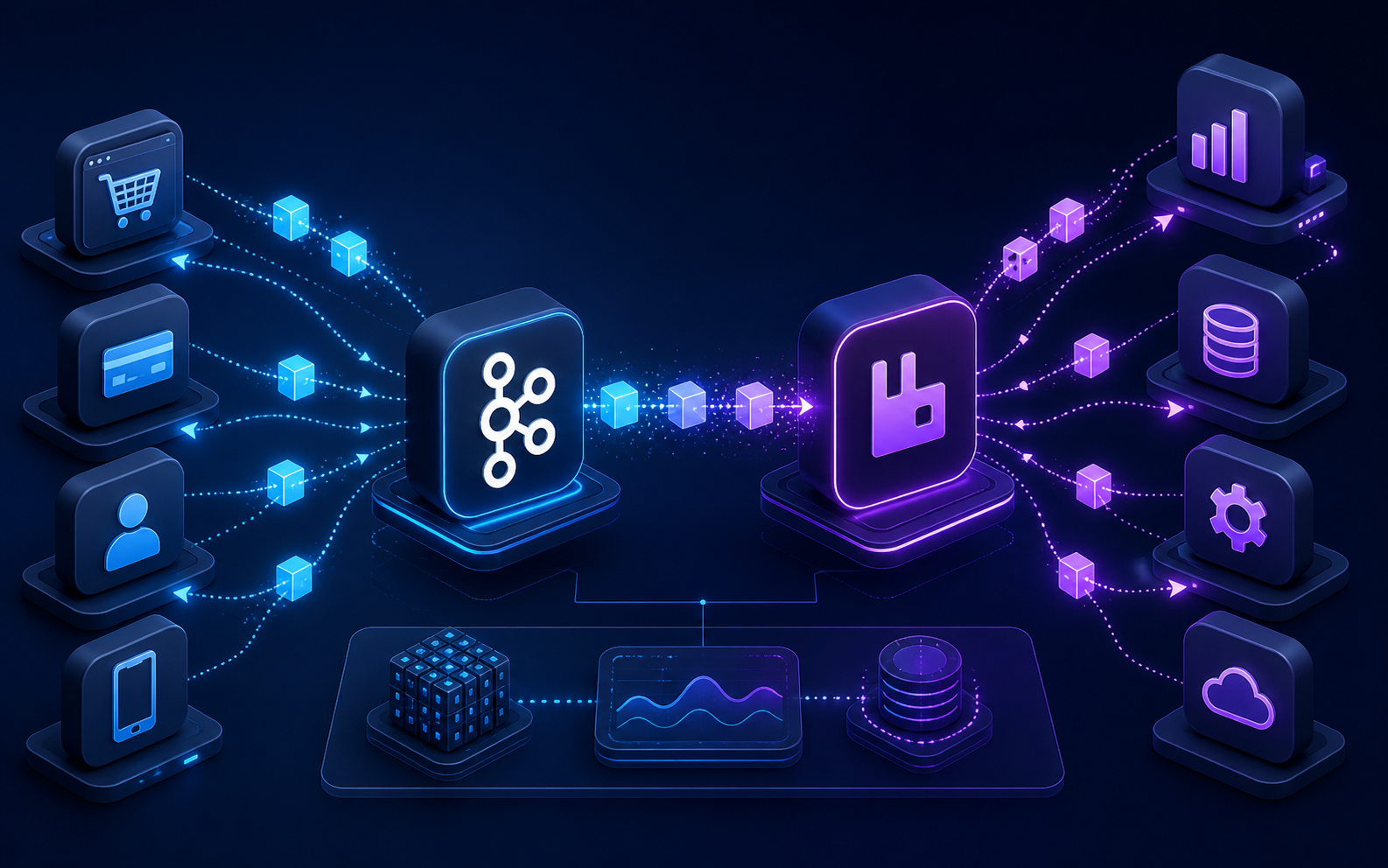
In an event-driven architecture, systems communicate by publishing and subscribing to events rather than making direct API calls. This decoupling makes systems more resilient, more scalable, and easier to extend — when you add a new service, it simply subscribes to the relevant events rather than requiring changes to existing services.
We design event-driven architectures using Apache Kafka for high-throughput, durable event streaming and RabbitMQ for simpler message queue scenarios. We define event schemas, implement producers and consumers, design dead letter queues for failed message handling, and set up monitoring for event lag and consumer health.
Event-driven use cases:
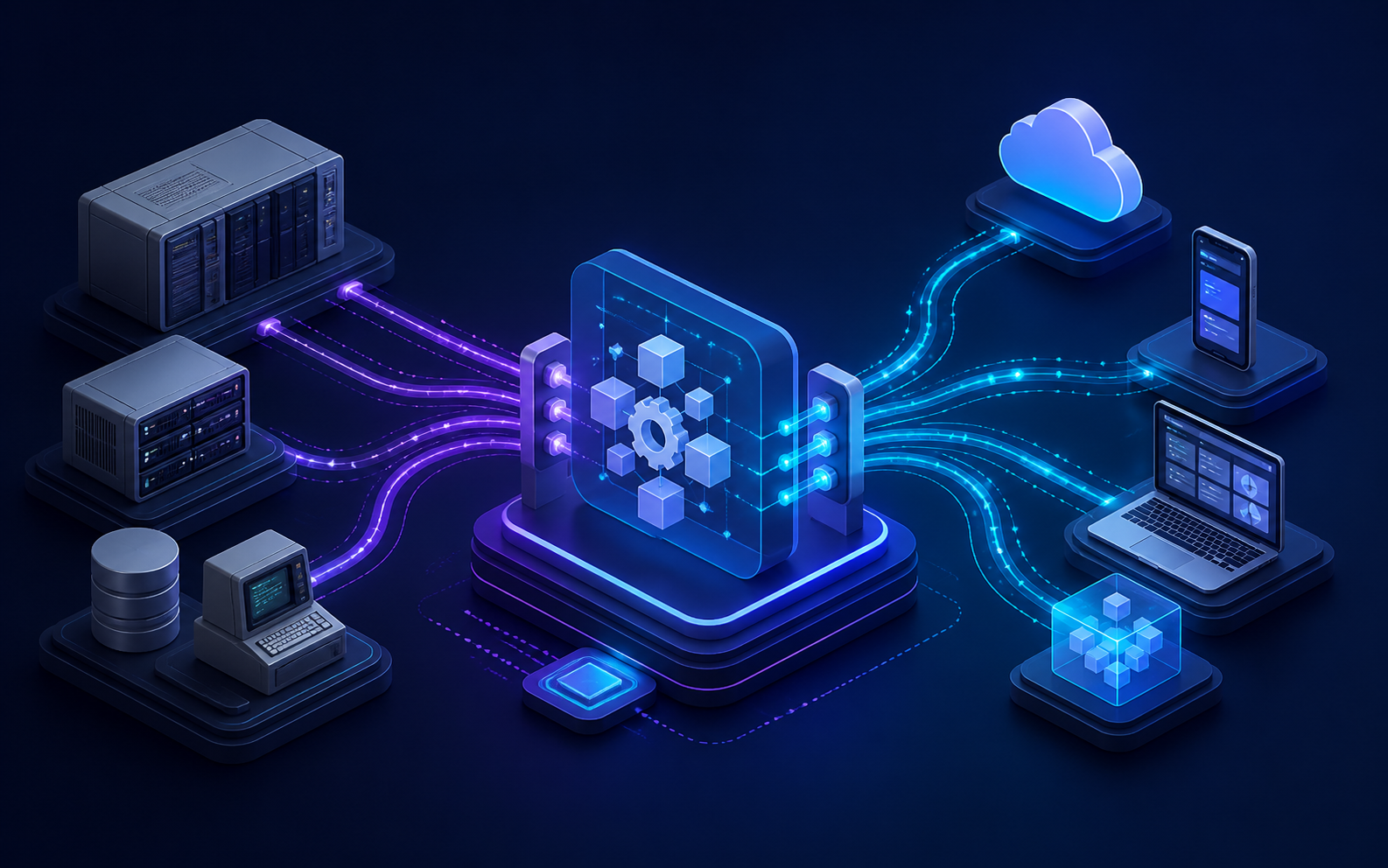
Most enterprises have critical business processes running on legacy systems — older ERP platforms, custom-built applications from the 1990s or 2000s, Oracle Forms applications, mainframe systems, and Access databases. These systems cannot simply be replaced, but they need to work with modern applications.
We specialise in building integration bridges between legacy and modern systems. We expose legacy functionality through modern APIs using facade patterns, implement data synchronisation between old and new systems, and build modernisation roadmaps that allow gradual migration rather than risky big-bang replacements.
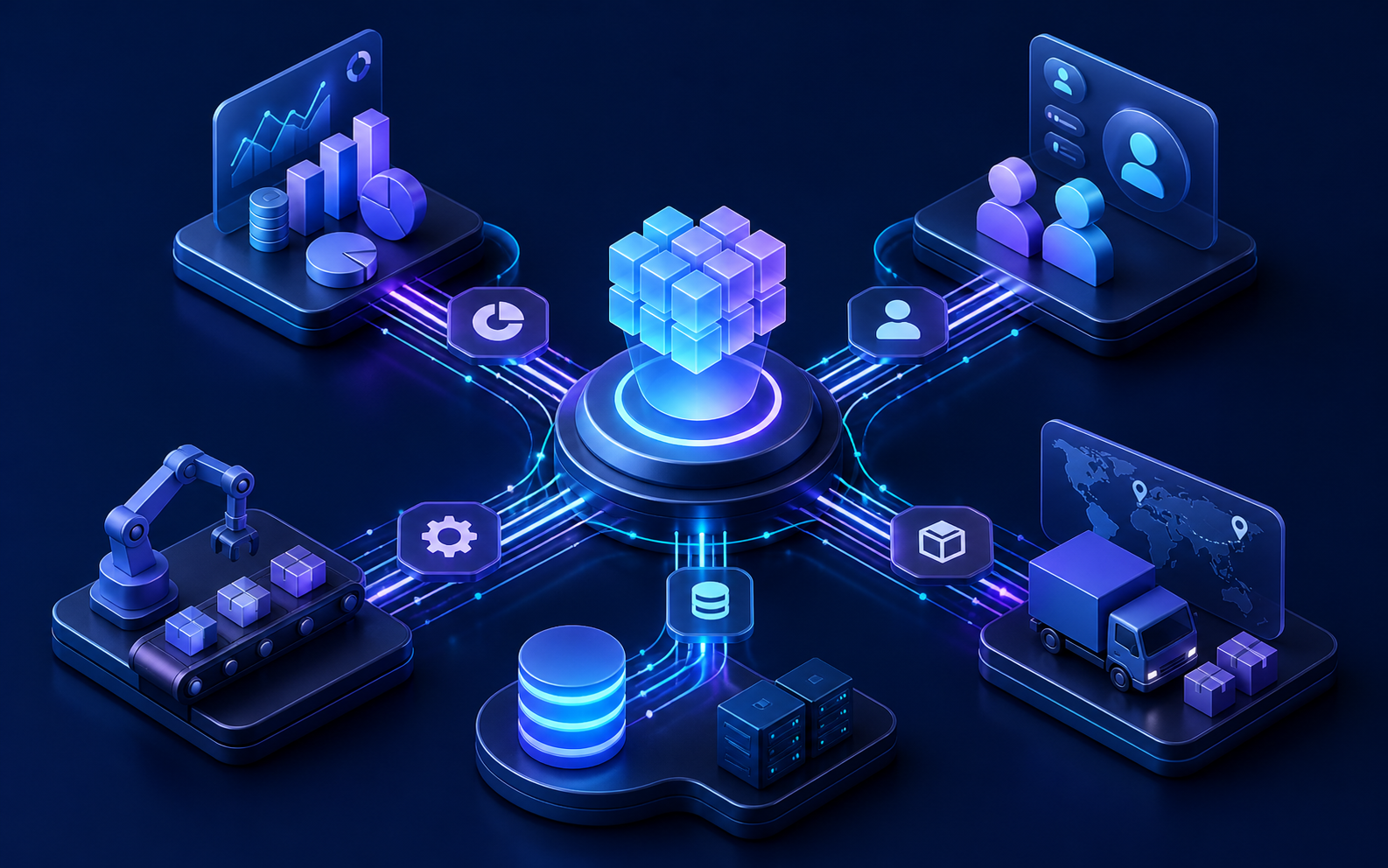
ERP and CRM systems are the backbone of most businesses — but they are often poorly integrated with each other and with the surrounding software ecosystem, creating duplicate data entry, synchronisation delays, and reporting gaps.
We have integration experience across the major ERP and CRM platforms. We implement bi-directional synchronisation between systems, design the master data management rules that determine which system is the source of truth for each data domain, and build the reconciliation processes that detect and resolve conflicts.
Platforms we integrate:
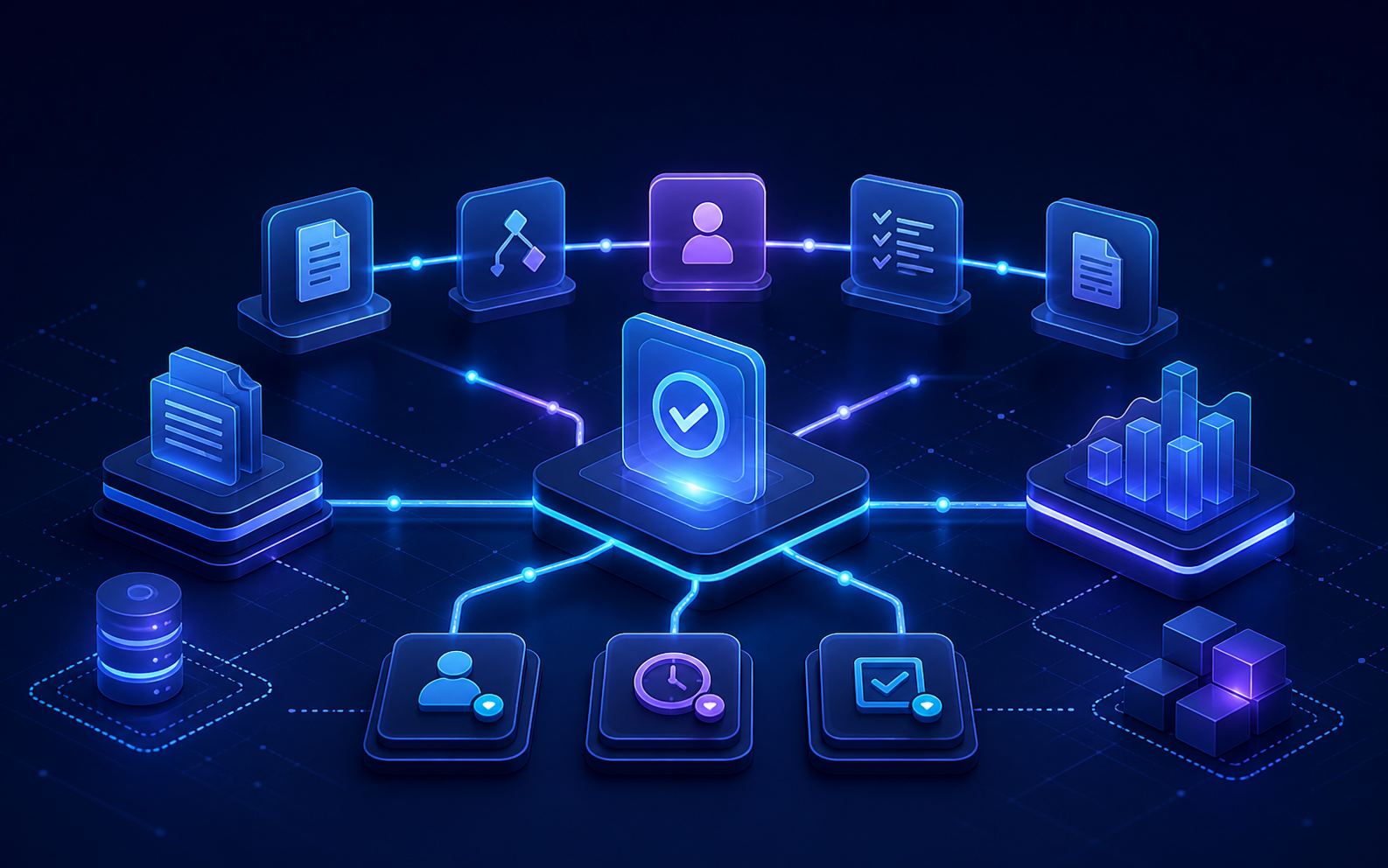
Not every automation requires custom software development. Low-code platforms like Microsoft Power Automate, N8N, and Zapier allow business teams to build and maintain automation workflows with minimal IT involvement — enabling faster iteration and reducing the backlog on development teams.
We help businesses implement low-code automation strategies — identifying which workflows are suitable for low-code tools, training business teams to build and maintain their own automations, and providing governance frameworks that ensure low-code implementations stay secure, documented, and maintainable.
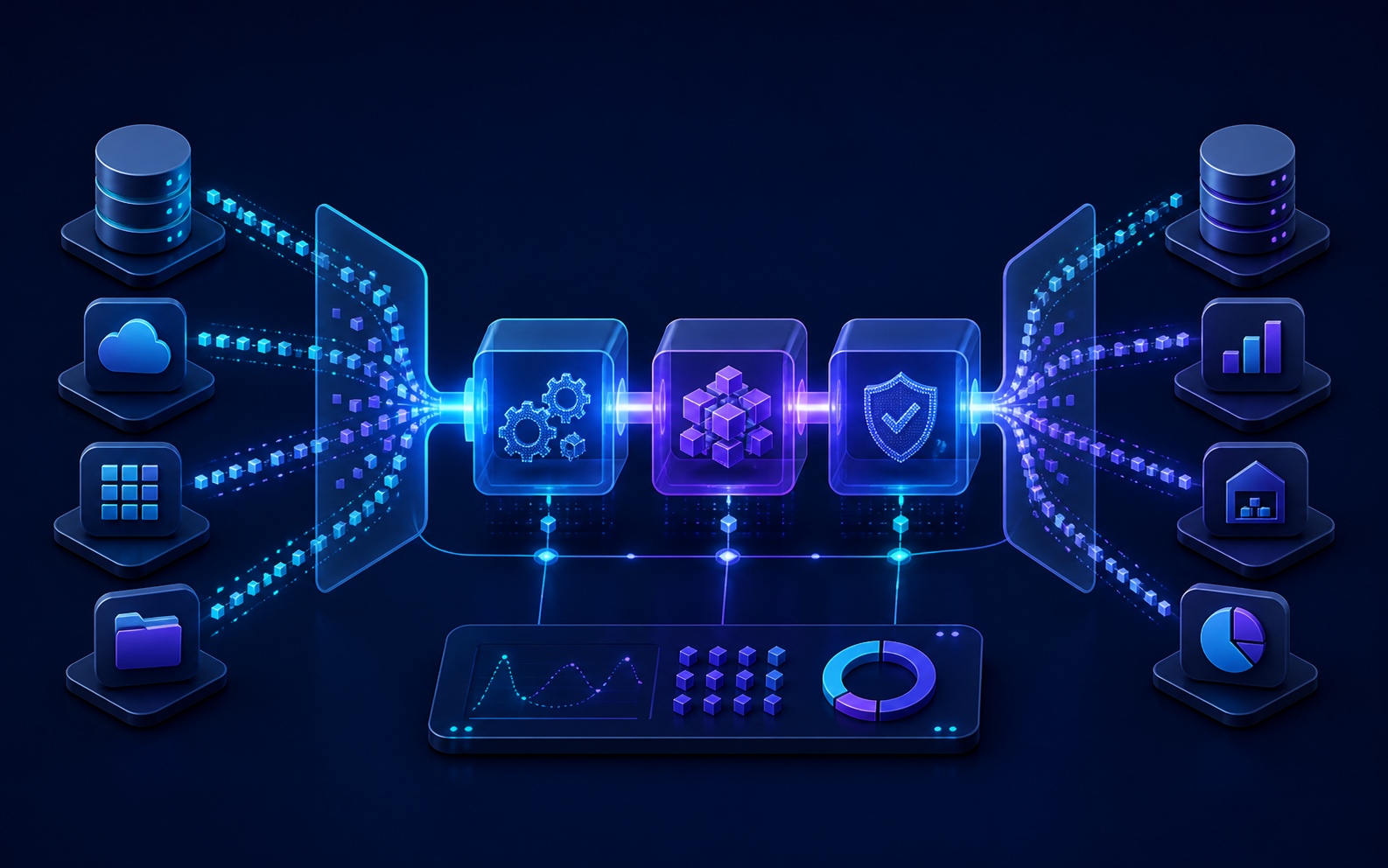
Data integration — moving data between operational systems and analytical systems — is often a fragile, manual process involving scheduled batch exports and fragile file transfers. Modern data integration replaces these with reliable, monitored, schema-aware pipelines.
We build robust data integration pipelines that automate the movement of data from your operational systems into your analytics platform. We handle schema changes gracefully, implement data quality checks at every stage, and provide monitoring dashboards that show pipeline health at a glance.
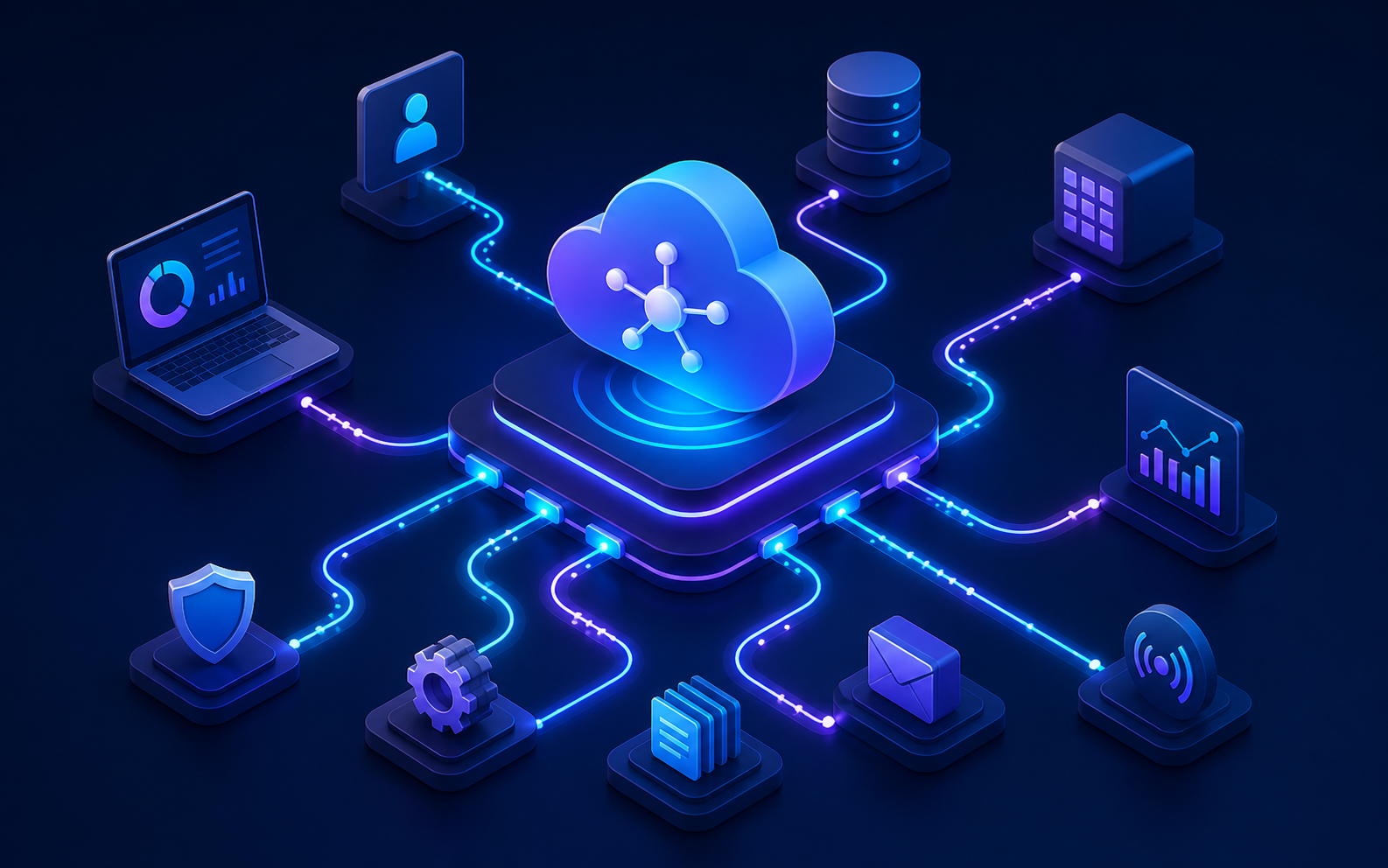
Integration Platform as a Service (iPaaS) tools — like MuleSoft, Dell Boomi, Azure Integration Services, and AWS EventBridge — provide pre-built connectors, monitoring, and governance for enterprise integration programmes. Implementing them correctly requires architectural expertise and platform knowledge.
We design integration architectures using iPaaS platforms and implement the connector patterns, transformation logic, error handling, and operational monitoring that make enterprise integration programmes reliable and maintainable. We also evaluate which iPaaS platform is right for your specific technology landscape and budget.
Manual testing is a bottleneck that slows every product release. As application complexity grows, the amount of manual regression testing required grows even faster — until release cycles slow to a crawl and confidence in each release is low.
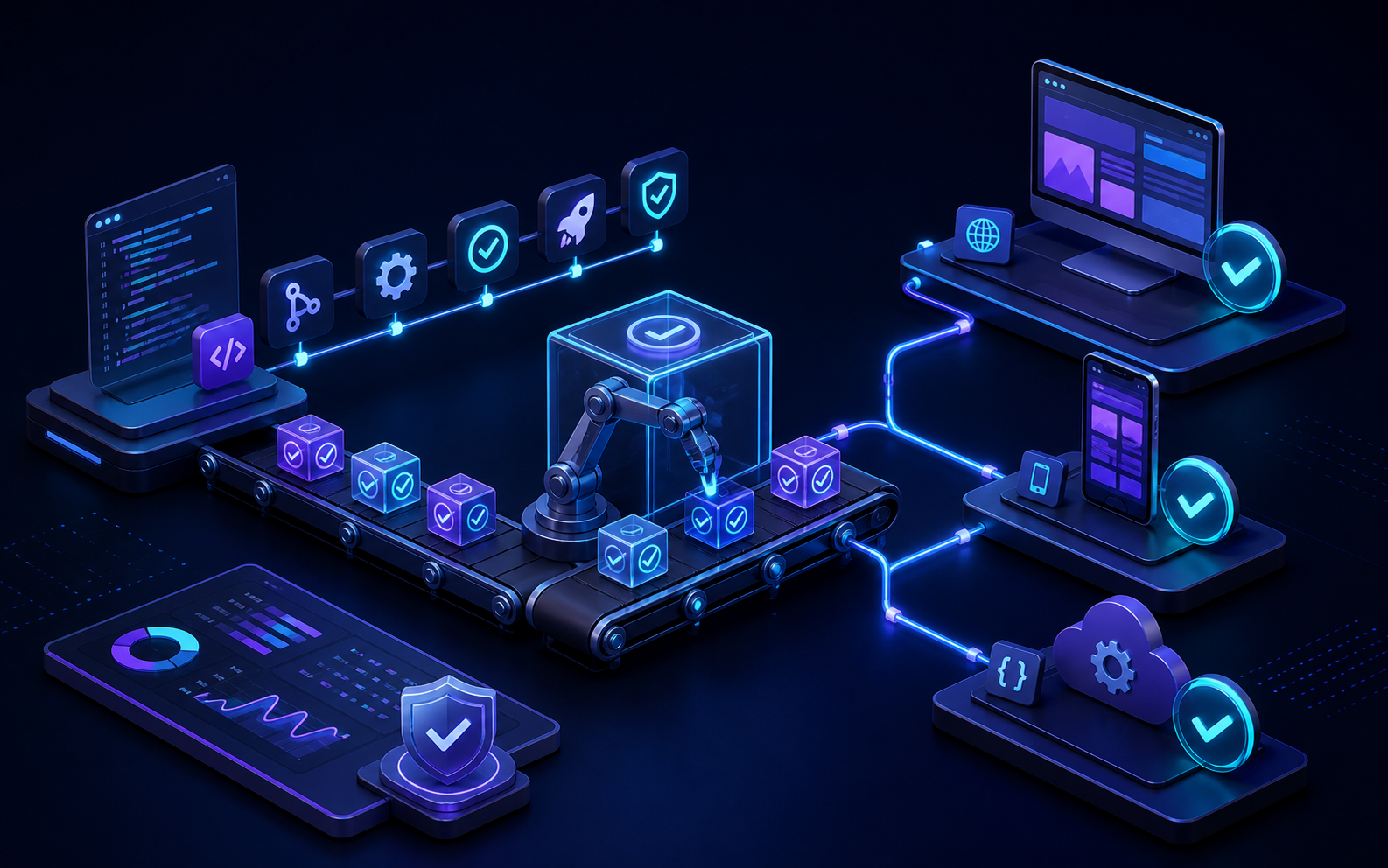
We build automated test suites that give development teams the confidence to ship frequently. We implement end-to-end tests with Playwright and Cypress, API contract tests with Pact, unit and integration tests with Vitest and Jest, and performance tests with k6. We integrate all tests into CI/CD pipelines so every code change is automatically validated before deployment.
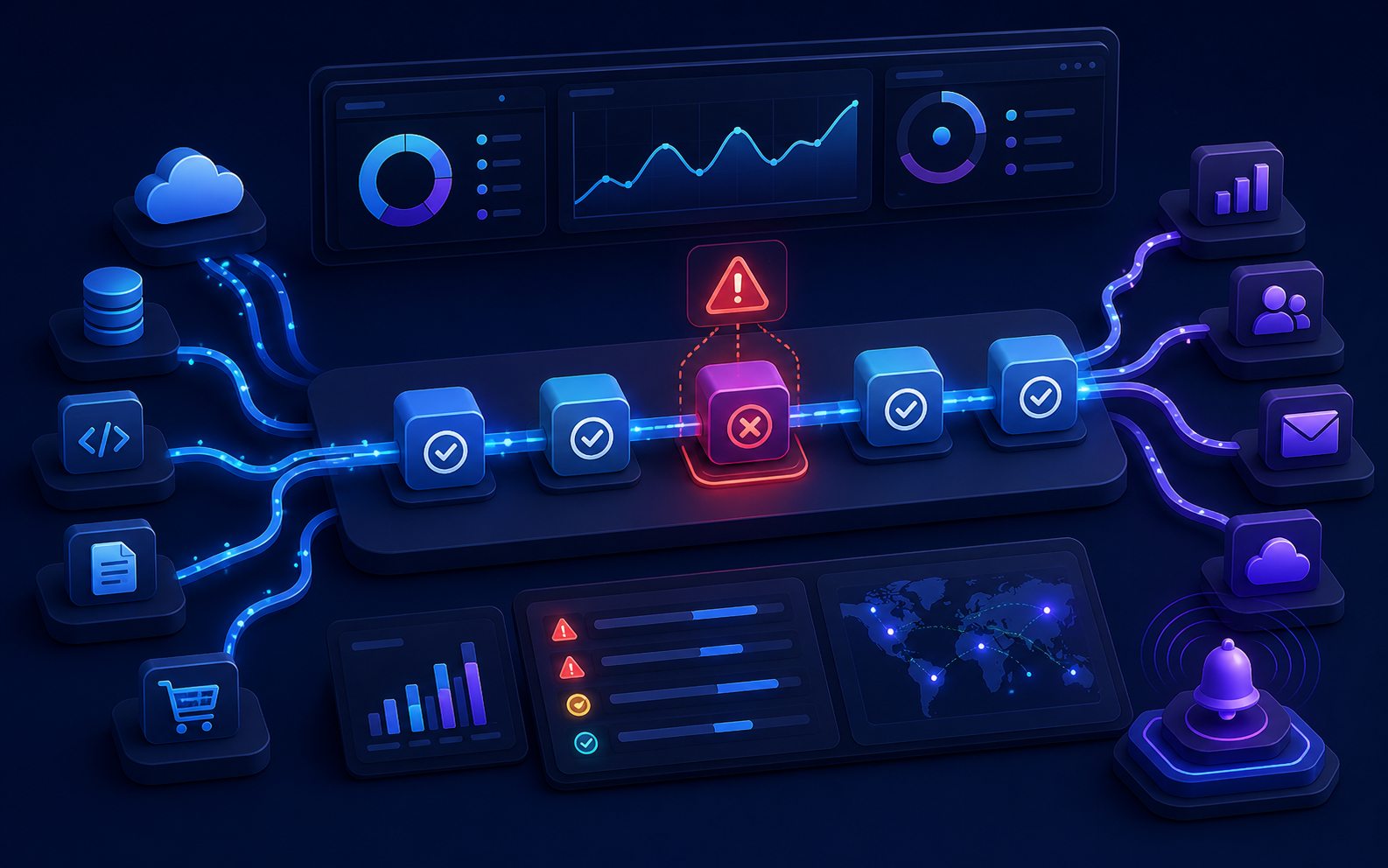
Enterprise integrations are only valuable when they work reliably. A failed integration that silently drops transactions is often worse than no integration at all — data becomes inconsistent, errors go undetected, and trust in the systems erodes.
We implement comprehensive monitoring for all integration flows — tracking message volumes, latency, failure rates, and retry counts. We set up alerting for failures, implement dead letter queues and reprocessing workflows for failed messages, and build operational dashboards that give your integration team clear visibility into the health of every connection in your enterprise.